


Active accounts, inactive users: how social media interaction might change
At a time when the world is wondering whether AI will bring more benefits than drawbacks, Meta draws our attention to another issue we are currently facing: your social media account is not you, and it does not belong to you but to Meta. In fact, everything you do on the platform remains on the platform and is not your property. Meta grants you a space and you make use of it, but you are not the owner of either the account you have created (your profile) or the space you navigate and the posts you see (the algorithm).
AISOCIAL MEDIA
@persona.fra
3/8/20269 min read
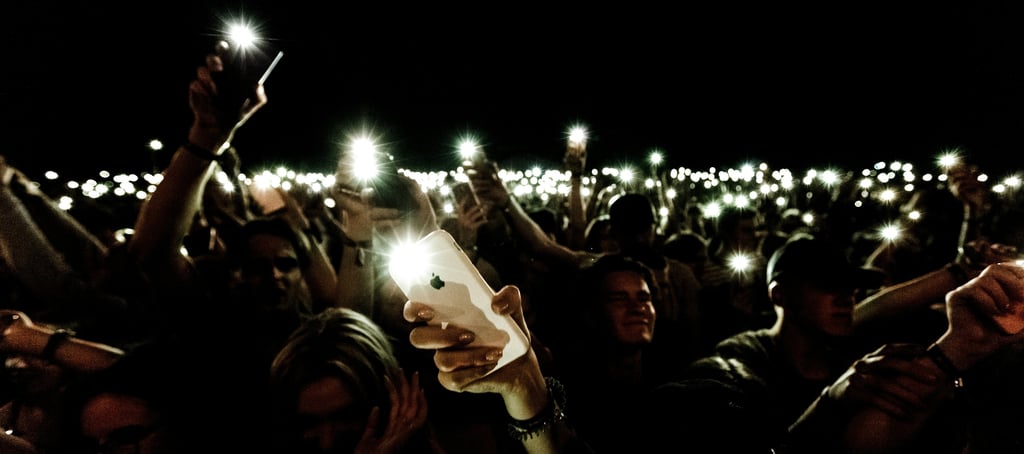

What should happen when you, as a user, have an inactive profile for a long time? Meta has filed a patent that opens the door to a new scenario, one that breaks down the barriers of death and keeps your account active just as you would. Because you were the one who taught it what to do, and it would be a shame to lose your interactions, which are as dear to users as they are to Meta itself, as they give the platform a reason to exist.
The patent
On 30 December 2025, the US Patent and Trademark Office granted Meta Platforms Technologies patent US12513102B2, entitled ‘Simulation of a user of a social networking system using a language model’ (1). The lead inventor is Andrew Bosworth, Meta’s CTO (2), so we are not talking about a newcomer, but a high-ranking figure who has a strong influence on the future of the platform.
The patent, filed on 29 November 2023 and due to expire in 2043, describes a comprehensive system for training a language model (LLM) on a user’s historical data. This includes what the user posts, how they comment, the likes they give, the messages they send and even the voice messages they record.
All this information would be used to automatically generate interactions following the user’s prolonged absence, and consequently even after their death (3).
At a time when we hear nothing but talk of AI and its application in the digital world, it is important to understand and analyse the use of certain technologies in the spaces we use every day, which influence us and have an impact on our lives at every single moment (4).
How it works
Now that we know what this is all about, let’s see what some researchers have to say and how it works in practice:
It all starts with a Training Data Generation Module that collects user interactions and stores them for training, which takes place via Reinforcement Learning with Human Feedback (RLHF) (1);
A bot then monitors a second user (let’s call them the target user) and our account can generate contextualised responses (taking into account family relationships, ‘affinity scores’, proximity to events such as birthdays, etc.) (5), and can produce not only text but also simulated audio calls and video calls with an AI-generated avatar (6);
The patent even provides for the possibility of creating specific language models for different user ages (for example, at 20, 25 and 30 years old), each trained solely on data available up to that point in time (7).
So we are talking not only about interactions, but also about creating users within specific timeframes, such as a friend aged between 18 and 22, who speaks, interacts and posts different content compared to now that they are 30.
The stated aim of the patent is to ensure that “other users may not notice the absence of the target user” (1). According to Meta, therefore, the aim is not to increase the number of users, but to ensure that active users do not notice the absence of users who are not present. On the issue of transparency, i.e. knowing whether the content/message/interaction is real or generated by AI, this is indicated as an optional implementation, not a mandatory one (2).
The consequences
Naturally, the internet has done what it does best: gone viral. Tom Divon, of the Hebrew University of Jerusalem, in his study ‘Artificially alive’, introduced the concept of ‘spectral labour’ – that is, how AI understands the account, extracts data and processes it to generate future interactions – and called for the establishment of a ‘digital DNR’ (do not resuscitate) (8).
Cambridge researchers Tomasz Hollanek and Katarzyna Nowaczyk-Basińska have outlined three scenarios involving at-risk individuals who may suffer tangible harm (9):
A grandmother’s voice being used to generate advertisements;
Children who may interact with deceased relatives and parents;
The inability to deactivate these interactions and the activities of AI accounts (10).
Professor Edina Harbinja of the University of Birmingham highlighted the clear commercial motivations: “more engagement and more data” (7).
Finally, the OECD AI Policy Observatory classified the patent as an ‘AI Hazard’ (11).
Meta responded by stating: ‘We have no plans to move forward with this example’, adding that companies file patents to protect concepts that ‘may never be built’ (7).


We will never do that
Meta has already made similar statements, and to better understand what we can expect in a few years’ time, it is useful to look at another very similar case: facial recognition.
2014 - Facebook filed a series of patents for detecting users’ emotions via a smartphone’s front-facing camera (12), all without the user knowing when this feature would be active or not (passive imaging data). At the time, Facebook’s official response was: “We often seek patents for technology we never implement, and patents should not be taken as an indication of future plans” (13). Minor differences, but the statement is essentially the same as the one used today.
2015 - While those statements were being released, Facebook launched DeepFace. This is a facial recognition system with 97.35% accuracy, surpassing human capability in some benchmarks. The system expanded, starting with training on four million photos uploaded by users themselves, before becoming part of the system in early 2015 (14).
2021 - Meta announced that it had shut down Facebook’s Face Recognition. A press release cited ‘growing concerns’ and the need to find ‘the right balance’. As a result, over a billion individual facial templates were subsequently removed (15).
2024 – Two Harvard students demonstrated what had by then become technically obvious: by linking Meta Ray-Bans to a facial recognition service and other tools, it is possible to automatically match a face to a name, phone number and home address (16). The test was carried out in public places, such as parks and underground stations, demonstrating how it was possible to ‘recognise’ a person simply by looking at them.
Meta responded by pointing out that the glasses are fitted with LEDs, so a person knows when they are being ‘analysed’. Meta now faces two possible options. Either it takes steps to limit the use of these technologies to reassure users about such dystopian scenarios, or it will ride the wave and try to derive some direct benefit from it.
What do you think happened?
2026 – The New York Times reveals that Meta is planning to add facial recognition directly to Ray-Bans, with a feature internally referred to as “Name Tag” (17). And this is where trust in such a corporation vanishes completely, because an internal company memo explicitly states that “We will launch during a dynamic political environment where many civil society groups that we would expect to attack us would have their resources focused on other concerns”, all the while taking advantage of the unrest shaking the US, which serves as a distraction from this news (17).


We will never do that
Meta has already made similar statements, and to better understand what we can expect in a few years’ time, it is useful to look at another very similar case: facial recognition.
2014 - Facebook filed a series of patents for detecting users’ emotions via a smartphone’s front-facing camera (12), all without the user knowing when this feature would be active or not (passive imaging data). At the time, Facebook’s official response was: “We often seek patents for technology we never implement, and patents should not be taken as an indication of future plans” (13). Minor differences, but the statement is essentially the same as the one used today.
2015 - While those statements were being released, Facebook launched DeepFace. This is a facial recognition system with 97.35% accuracy, surpassing human capability in some benchmarks. The system expanded, starting with training on four million photos uploaded by users themselves, before becoming part of the system in early 2015 (14).
2021 - Meta announced that it had shut down Facebook’s Face Recognition. A press release cited ‘growing concerns’ and the need to find ‘the right balance’. As a result, over a billion individual facial templates were subsequently removed (15).
2024 – Two Harvard students demonstrated what had by then become technically obvious: by linking Meta Ray-Bans to a facial recognition service and other tools, it is possible to automatically match a face to a name, phone number and home address (16). The test was carried out in public places, such as parks and underground stations, demonstrating how it was possible to ‘recognise’ a person simply by looking at them.
Meta responded by pointing out that the glasses are fitted with LEDs, so a person knows when they are being ‘analysed’. Meta now faces two possible options. Either it takes steps to limit the use of these technologies to reassure users about such dystopian scenarios, or it will ride the wave and try to derive some direct benefit from it.
What do you think happened?
2026 – The New York Times reveals that Meta is planning to add facial recognition directly to Ray-Bans, with a feature internally referred to as “Name Tag” (17). And this is where trust in such a corporation vanishes completely, because an internal company memo explicitly states that “We will launch during a dynamic political environment where many civil society groups that we would expect to attack us would have their resources focused on other concerns”, all the while taking advantage of the unrest shaking the US, which serves as a distraction from this news (17).
Conclusions
The fact that all this leaves me feeling both indifferent and concerned at the same time highlights just how little we, as users and consumers of the platform, can do once we have learnt of this news.
A quote by Edward R. Tufte springs to mind: “Only two industries call their customers ‘users’: computer design and the drug trade” (18).
It is no coincidence that the most significant trial ever is taking place right now, comparing social media to drugs due to the alleged addiction they create (19), just as cigarettes were linked to cancer years ago.
Companies operate for profit, and it is society’s duty to protect the most vulnerable and prevent the harm that certain actions cause, whether intentionally or not.
The market does not regulate itself, and we need to start becoming aware of what matters to us and affects us. Not least because, if you were investing your own money on a platform, knowing that the very company running the auctions is the one deciding who to show your advert to – and might even charge you for clicks from accounts managed by AI… that wouldn’t be fair at all, and unfortunately, no one could do anything about it as things stand.
Finally, when asked “Real or AI?”, we should no longer answer “yes/no”, but rather ask ourselves other questions that are of real interest:
How much does this affect me and the people close to me?
How much attention does this information deserve, and what consequences will it have for you?
Does all this have a positive impact on me, and on the time I’m spending on this rather than on other things?
Essentially, it no longer matters whether it is real or fake. What matters is your reaction when interacting with this content; that is what is real and should matter to you.
You cannot control what happens in the world, but you can manage your reaction to those events. And this is where I hope you will focus your attention from now on.


Sourses
Google Patents (2025) - Simulation of a user of a social networking system using a language model https://patents.google.com/patent/US12513102B2/en
Life with machines (2026) - Meta Patented Your Ghost https://www.lifewithmachines.media/p/meta-patented-your-ghost
Malwarebytes (2026) - Meta patenta una IA que podría permitirte seguir publicando desde el más allá https://www.malwarebytes.com/blog/ai/2026/02/meta-patents-ai-that-could-keep-you-posting-from-beyond-the-grave
Financial Times (2025) - Have we passed peak social media? https://www.ft.com/content/a0724dd9-0346-4df3-80f5-d6572c93a863
EWeek (2026) - Meta Patents AI That Could Keep Users Posting After Death https://www.eweek.com/news/meta-ai-patent-digital-afterlife-social-media/
Techspot (2026) - Meta patents AI that could continue posting on social media on behalf of deceased users https://www.techspot.com/news/111352-meta-patents-ai-could-continue-posting-social-media.html
Business Insider (2026) - Death isn't the end: Meta patented an AI that lets you keep posting from beyond the grave https://www.businessinsider.com/meta-granted-patent-for-ai-llm-bot-dead-paused-accounts-2026-2
Sage Journals (2025) - Artificially alive: An exploration of AI resurrections and spectral labor modes in a postmortal society https://journals.sagepub.com/doi/full/10.1177/14614448251397518
Research Gate (2024) - Griefbots, Deadbots, Postmortem Avatars: on Responsible Applications of Generative AI in the Digital Afterlife Industry https://www.researchgate.net/publication/380463361_Griefbots_Deadbots_Postmortem_Avatars_on_Responsible_Applications_of_Generative_AI_in_the_Digital_Afterlife_Industry
University of Cambridge (2024) - Call for safeguards to prevent unwanted ‘hauntings’ by AI chatbots of dead loved ones https://www.cam.ac.uk/research/news/call-for-safeguards-to-prevent-unwanted-hauntings-by-ai-chatbots-of-dead-loved-ones
OECD (2026) - Meta Patents AI to Simulate Deceased Users' Social Media Activity https://oecd.ai/en/incidents/2026-02-12-64e6
FPO (2014) - TECHNIQUES FOR EMOTION DETECTION AND CONTENT DELIVERY https://www.freepatentsonline.com/y2015/0242679.html
Digitaltrends (2017) - Facebook wants to turn real emotions into emojis by using your webcam https://www.digitaltrends.com/social-media/facebook-patents-emotion-tracking/
Riconoscimento Facciale - https://en.wikipedia.org/wiki/Facial_recognition_system
Facebook (2021) - An Update On Our Use of Face Recognition https://about.fb.com/news/2021/11/update-on-use-of-face-recognition/
YouTube - Harvard students turn Meta's Ray-Ban Smart Glasses into a surveillance nightmare https://www.youtube.com/watch?v=zKVXNVnPCrQ
New York Times (2026) - Meta Plans to Add Facial Recognition Technology to Its Smart Glasses https://www.nytimes.com/2026/02/13/technology/meta-facial-recognition-smart-glasses.html
Goodreads (2024) - Only two industries refer to their customers as 'users': computer design and drug dealing https://www.goodreads.com/quotes/10474074-only-two-industries-refer-to-their-customers-as-users-computer
The Guardian (2026) - Tech giants head to landmark US trial over social media addiction claims https://www.theguardian.com/technology/2026/jan/27/social-media-trial-meta-tiktok-youtube