

Unhinged Marketing: how employees are changing marketing
Whenever I think about marketing, I’m always reminded of a quote by David Packard, co-founder of HP, who said: “Marketing is too important to be left to the marketing department”. And that is precisely where the concept of ‘unhinged marketing’ comes from
BRANDINGSOCIAL MEDIA
@persona.fra
12/15/202513 min read


Social media has changed. Since reaching its peak in 2022, it has been used less and less to interact with friends and celebrities, and increasingly to fill spare moments (1). This tendency to fill the small moments of the day – such as a few minutes spent waiting for a bus or for a coffee from the machine – is reflected in the content that generates the most engagement and manages to give the brain that dopamine rush in a very short space of time. Today, at the end of 2025 and beginning of 2026, there is a trend that is becoming increasingly prevalent: content featuring employees who rebel or engage in controversial activities in the workplace.
Let’s start with the definitions, then we’ll look at the general results achieved, and finally at case studies from the first companies that have experimented with this type of language on their social media and how you can apply it to your own.
Employee-Generated Content (EGC) (2) refers to any content—memes, videos, posts—created and shared by a company’s employees. It differs from traditional User-Generated Content because it originates from the company rather than from customers;
Employee Advocacy (3), on the other hand, is the strategic framework: the corporate program that encourages employees to become brand ambassadors on their own channels;
Unhinged Marketing (4) (I like to call it “unleashed marketing” because of its “out-of-control” nature) represents the actual stylistic approach: controversial, unpredictable, often absurd content, where brands abandon the corporate filter to communicate as a friend would. A spin-off of Guerrilla Marketing, it includes sharp comebacks, chaotic mascots, and a casual tone that borders on the absurd;
Meme Marketing (5) is the specific tactic of using recognizable formats (memes, in fact) to create culturally relevant content. In other words, to follow trends and make both the algorithm and us happy, because we gain visibility without sponsorships.
The point of these statements is not to demonstrate that marketing is complex, but rather that it cannot be reduced to mere “advertising”
EGC and Unhinged marketing
As Ogilvy (6) predicted back in 2023, EGC combined with unhinged marketing is described as the most influential trend for the coming years, with those who have adopted it seeing mostly positive results, both in the workplace and in terms of social media content. All of this comes with the added benefit of engaging company employees, those who experience the company day in and day out, and thereby creating in-house influencers. The question is: why does it work?
The strategy works because 76% of consumers (7) trust content created by employees more than branded content. As explained by Zaria Parvez, the 23-year-old who turned Duolingo into a cultural phenomenon: “Gen Z has a highly developed anti-bullshit radar for corporate content and a deep respect for authenticity and humor” (8).
The effectiveness of this approach is based on three interconnected pillars:
Perceived authenticity: Social media is increasingly seen as inauthentic and untrustworthy (9), so companies are turning to real people to share content, which is perceived on average as 2.4 times more authentic (10) than traditional corporate content (11);
Amplified reach: Employees have personal networks that are on average 10 times larger than corporate accounts (12), and the messages they share reach 561% more people than official channels (13);
Emotional connection: As Kara Redman, CEO of Backroom, explains: "People are looking for connection, with brands and with other people. We’re lonely. We need something to belong to, and social media offers unlimited possibilities, which is terrifying. When a brand shows it understands us, we feel like we’re part of something again” (14). Memes create exactly this shared sense of cultural belonging, where like-minded people can see themselves reflected, and they’re also easy to replicate and adapt.
Engagement, ROI and conversions
Now that we’ve finished the theory, let’s move on to the practical side and what everyone’s looking for: data on the effectiveness of certain strategies.
When it comes to engagement—that is, when users physically interact with our content:
Content shared by employees generates 8 times more engagement and is shared 24 times more often than company posts (13);
Meme marketing achieves 10 times more reach and 60% more engagement than traditional content (12).
As for ROI (I can tell this is the only thing you care about):
Fujitsu reported a 3.6-fold higher return on employee advocacy compared to the same expenditure on social media advertising (15);
Capco reports that traffic generated by employee advocacy converts at a rate of 51.7%, compared to 3.93% for paid advertising traffic. Practically 13 times higher (37).
As for sales, companies with active EGC programs saw a 19% increase in the first year (2). Here are a few specific examples:
MoonPie, a century-old confectionery brand, saw a 17% increase in sales without launching new products, expanding distribution, offering discounts, or running TV ads. Only one thing had changed: the social media manager’s self-deprecating tweets (16);
Scrub Daddy, the brand behind the smiling sponge, saw CEO Aaron Krause declare in 2022: “To sell the brand, we rely on memes rather than product demonstrations, and it works!” and reported a significant return on TikTok spending, with retail sales doubling in just one year (17);
When Ryanair goes from reaching 5 million to 30–40 million people weekly—all without advertising spend—the economic potential becomes clear. As for trust, 88% of consumers cite authenticity as a key factor in choosing brands (18), particularly for Gen Z, the very generation fully immersed in the era of AI-generated content.
Now let’s dive even deeper into the details and see what some companies have done and what they’ve gained in return. Is it all roses and sunshine? Obviously not, because there’s no magic formula—only a strategy that must be well-organized and executed.
The story begins in June 2020, when Zaria Parvez, 23, fresh out of the University of Oregon with a degree in journalism, was hired as a social media coordinator for Duolingo (8).
She says she worked alone on the brand’s social media for over a year, until September 2021, when she noticed the Duo owl costume abandoned in the HR area.
“I had a few ideas,” she told her managers. “I don’t need money. I have a moldy owl costume and an iPhone.”
From that moment on, the TikTok account grew from 50,000 to 16.7 million followers, a 45,600% increase (19). What did she create to make that happen?
A “menacing” character who haunts users to get them to finish their lessons (20);
Madly obsessed with Dua Lipa (Dua Lipa - Duo Lingo, got it?);
Completely free to ride any cultural trend in a crazy and absurd way.
Little by little, Duolingo refined the character, hiring a “mascot specialist” who used to work for Sesame Street (yes, the Muppets) as an external consultant. His role is to establish the character’s boundaries. Parvez says of him: “He’d tell us things like, ‘This is what Elmo could or couldn’t do.’”
Duolingo’s CEO, who was initially skeptical, is now urging the team to be “more unhinged.” Speed is crucial: the February 2025 “Death of Duo” viral campaign—in which the owl is hit by a Tesla Cybertruck, dies, and then comes back to life after users accumulate 50.9 billion XP points—was conceived and executed in just 6 days.
Result: 1.7 billion impressions in two weeks (19), double that of the top 10 Super Bowl 2025 commercials combined.
Duo even has a full name: Duo Keyshauna Renee Lingo, born in 1000 B.C. according to her viral “death certificate” (8). She has a personal seamstress who creates different costumes for every event. And as a final note, the song “Spanish or Vanish,” which began as a community meme, was turned into an actual track released on Spotify (21).
When Zaria Parvez started wearing the hijab full-time in 2023, she said: “A lot of people were like, ‘Wow, I didn’t think the Duolingo owl was a Muslim girl wearing a hijab.’” She explained: “I didn’t see anyone who looked like me. It made me realize that Muslim women wearing hijabs simply don’t exist in marketing” . (8)
Duolingo
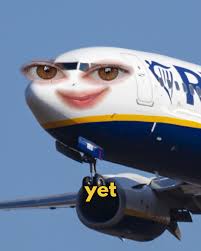
If Duolingo pioneered unhinged marketing on TikTok, Ryanair perfected it on Twitter with a highly controversial approach: embracing all the criticism it receives. Cramped seats? No comfort? Extra baggage fees? Instead of defending itself, the brand laughs at itself and doesn’t take itself too seriously (22).
Michael Corcoran, former Head of Social, built an 8-person team divided into two units: one for scheduled content, the other for real-time reactions. It’s worth noting that Corcoran was the sole approver of all content, eliminating the bottlenecks that today paralyze other brands when they need to publish content (23).
When a user complained about the “woke twenty-something idiots” running the account, Ryanair responded by updating the profile bio with that description (24). When someone asked about USB ports for charging devices, the reply was: “Yes, they’re right under the ‘Massage’ function on the seat” (25).
The results speak for themselves: 2.5 million TikTok followers, more than easyJet, Jet2, TUI, British Airways, Virgin Atlantic, and Etihad combined. All with zero advertising budget (26).
It’s worth noting that in October 2023, Corcoran resigned and, in a post on X, denounced the toxic corporate culture and managers who “verbally abused people in public.”
Later, the head of McDonald’s social media department, Guillaume Huin, would say of him: “You and your team have redefined the industry we operate in and opened new horizons for all social media departments around the world” (27).
Ryanair
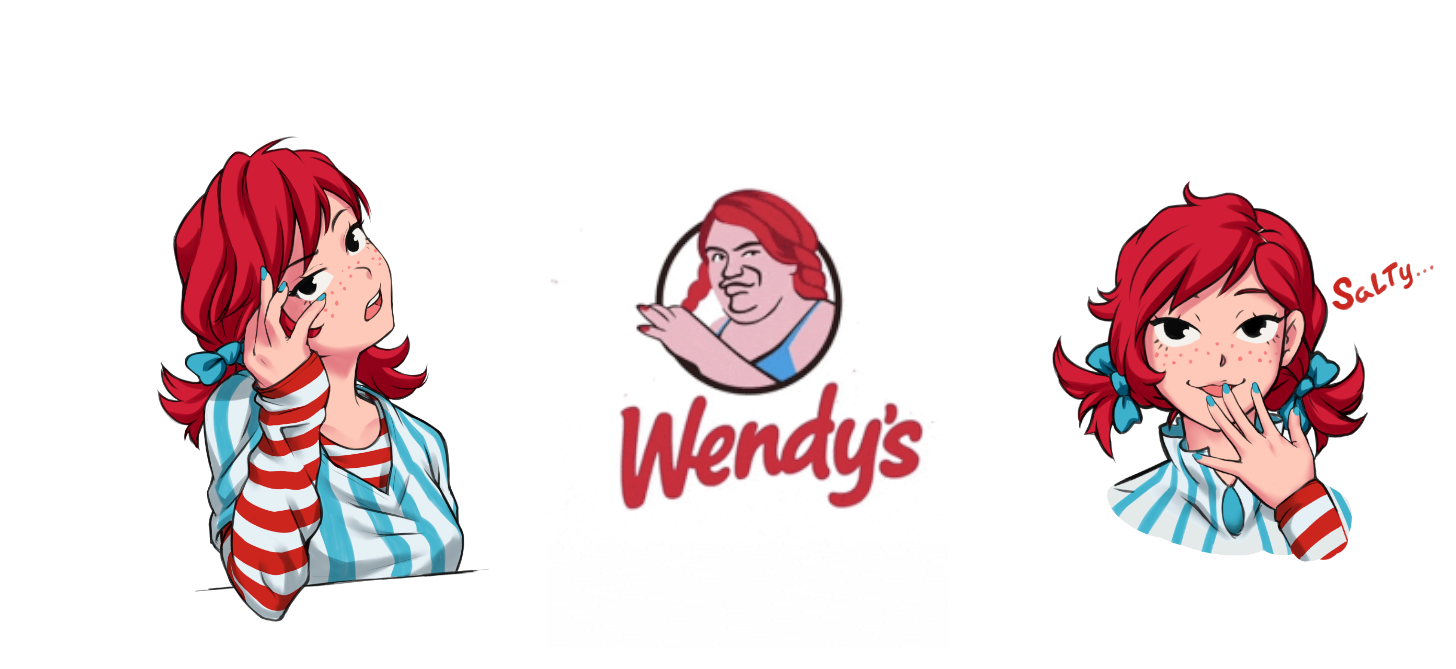
This is history, as she is perhaps the true pioneer in the field of unhinged marketing. It all began in 2017 with a tweet. Amy Brown, Wendy’s social media manager, responded to a troll, Thuggy-D, who was questioning the brand’s “fresh, never frozen” promise (28, 29). When Thuggy-D sarcastically asked where Wendy’s stored its meat if not in the freezer like McDonald’s does, Brown replied, “Where else would you store something that isn’t frozen if not in the fridge?” (30).
Twitter followers skyrocketed from 2.1 to 3.8 million. From that moment on, National Roast Day was born (originally January 4, now with a variable date), a made-up holiday where Wendy’s insults other brands and users of all kinds.
Ultimately, Brown paid a very high personal price (31). In a confessional essay, she revealed that her personal accounts were discovered and attacked: “My inbox was flooded with anti-Semitic threats, offensive cartoons, and photos of genitals. Someone found my address. It was accurate, though outdated, and it scared me so much that I threw up.”
The various threats she received, along with the attention from the American alt-right for being Jewish, led her to leave her job shortly thereafter in March 2017.
There’s one detail worth noting: unlike Duolingo and Ryanair, Wendy’s uses an outside agency (VML). Matt Keck, a creative director who was on the team with Amy at the time, worked on the account for 11 years, gaining a wealth of experience, and recently shared his story on the #RoastME podcast.
Wendy's
So, if unhinged marketing is so powerful, why doesn’t everyone do it? Well, because there’s no golden rule—just a way to apply it. Michael Caine would say, “Use the difficulties,” and if you don’t know what I’m talking about, look it up immediately and listen carefully. Personal growth gem aside, not all attempts at unhinged marketing work:
Burger King posted “Women belong in the kitchen” on March 8, 2021, with the intent of starting a thread to raise awareness about the lack of equal opportunities in the restaurant industry for women who want to become chefs. The problem? The first tweet appeared out of context and nonsensical, leading Burger King to apologize and delete the entire thread (32). You shouldn’t laugh at other people’s misfortunes, but I can’t deny that I had to laugh when I read this story;
DiGiorno, a frozen pizza brand, tried to capitalize on the #WhyIStayed hashtag trend to gain visibility and posted: “#WhyIStayed You had pizza.” The problem? They hadn’t checked that the hashtag was about stories of domestic violence. They spent hours and hours apologizing individually to every user, but by then the damage was done (33);
American Apparel posted a stylized image of the Space Shuttle Challenger exploding for the 4th of July, mistaking it for fireworks. The company’s explanation: “Our social media manager was born after the tragedy” (33);
And then there’s Chick-fil-A, which strongly urged an employee (known as MiriTheSiren) to stop posting photos of her meals at work, a practice that had previously earned her 117,000 followers on TikTok (34). The issue remains controversial, because on the one hand the company benefited from this free publicity from the viral videos, while on the other hand there was a violation of the terms of the contract, which normally prohibits employees from filming themselves at the workplace. In the end, she resigned on her own, and now we’ll never know if the Chick-fil-A cafeteria serves chicken on Wednesdays…
Mistakes and disputes


Conclusions
Successful brands don’t just sell products. They create characters, become part of a culture, and embrace being teased, just like a bond between friends, people, or partners. And just like in a romantic relationship, you have to show your vulnerabilities to build a connection and be more authentic and less perfect.
To implement a strategy based on unhinged marketing, you’ll need to:
Identify how your brand can use this approach. Does it solve a problem consumers face? Does your target audience include Gen Z and/or Millennials? Are you willing to give up a little control?
Find the right person. Don’t look for experts with 10 years of experience; look for young people who live on TikTok and understand meme culture. Zaria Parvez was 23 when she started at Duolingo. Amy Brown was 27 when she sent the $1 billion tweet. Leopardi was 21 when he wrote “L’Infinito,” and Picasso was 25 when he pioneered Cubism;
Set broad and clear boundaries. Think back to the Sesame Street consultant for Duolingo and see them as an example of how to define the character, what they can and cannot do, and finally, allow complete creative freedom within those boundaries.
Accept that some content will fail. The secret isn’t to avoid mistakes, but to be quick to recognize them and respond with authenticity.
We’re in a unique moment where we can be the first to build a connection by showing something genuine that others don’t have—namely, our imperfections. Brands have always acted and communicated as “the best at” or “the strongest at,” and this culture has led us to say that we’re all better. Better than whom?
Now… are you able to take yourself less seriously?
“Use the difficulties” isn’t just a way of saying, “turn adversity into opportunity,” but a way to create something new. It’s a spontaneous reaction, where we all face difficulties, something that falls outside our usual framework. Use this powerful tool to achieve great results.
You’ll finally gain significant brand awareness; you’ll achieve the fame you’ve been boasting about and seeking, and then the question will finally become: “Will you be able to handle the weight of fame?”
Sourses
Financial Times (2025) - Have we passed peak social media? https://www.ft.com/content/a0724dd9-0346-4df3-80f5-d6572c93a863
Oktopost (2024) - What is employee-generated content? https://www.oktopost.com/blog/what-is-employee-generated-content/
HR Cloud (2025) - Employee Advocacy on Social Media: Benefits, Examples & Strategies https://www.hrcloud.com/blog/employee-advocacy-on-social-media
Serve me the sky (2023) - The Rise of Unhinged Marketing on Social Media (& How Your Brand Can Try) It) https://www.servemethesky.com/blog/unhinged-marketing-social-media
Mailchimp - Meme marketing: sfruttare i fenomeni di Internet per promuovere l'interazione https://mailchimp.com/it/resources/meme-marketing/
Ogilvy (2023) - THE GLOBAL RISE OF B2B INFLUENCER MARKETING (Slide 12) - https://www.ogilvy.com/sites/g/files/dhpsjz106/files/pdfdocuments/Ogilvy%27s%20Influencing%20Business%20Report_1.pdf
Ambassy - 20 Employee Advocacy Statistics That Will Inspire You https://www.ambassify.com/blog/employee_advocacy_statistics
The Drum - Meet the real Zaria Parvez: The social media manager who became the brand https://www.thedrum.com/news/meet-the-real-zaria-parvez-the-social-media-manager-who-became-the-brand
EdelMan - Edelman Trust Barometer Global Report 2025 (Slide 50) - https://www.edelman.com/sites/g/files/aatuss191/files/2025-01/2025%20Edelman%20Trust%20Barometer%20Global%20Report_01.23.25.pdf
Flocker (2024) - 51 UGC Statistics Highlighting Its Importance In 2024 https://flockler.com/blog/ugc-statistics
Everyone Social (2024) - 36 User-Generated Content Statistics That You Can’t Ignore https://everyonesocial.com/blog/user-generated-content-statistics/
DSMN8 (2025) - What is Employee-Generated Content? The Ultimate Guide https://dsmn8.com/blog/what-is-employee-generated-content/
Inbeat (2025) - Employee Generated Content: 7 Tactics to Scale Marketing ROI https://www.inbeat.co/articles/employee-generated-content/
Sproutsocial (2025) - Unhinged marketing has gone mainstream, but consumers crave honesty https://sproutsocial.com/insights/unhinged-marketing
Oktopost - Fujitsu Gains a 360% ROI in 6 Months with Employee Advocacy https://www.oktopost.com/case-studies/fujitsu
Fast Company - Turning MoonPie into Twitters funniest snack cake https://www.fastcompany.com/40510696/meet-the-agency-that-turned-moonpie-into-twitters-funniest-snack-cake
Medium (2022) - TikTok Best Practices: Scrub Daddy https://medium.com/@katrinacalkins/tiktok-best-practices-scrub-daddy-c74de1e42c09
Energy PR (2025) - 35+ Brand Statistics for 2026 https://www.energypr.co.uk/blog/30-brand-statistics/
Inc (2025) - Jealous of Duolingo’s Social Media? Here's How to Emulate It https://www.inc.com/ali-donaldson/jealous-of-duolingos-social-media-the-strategist-behind-it-just-shared-advice-for-brands/91229759
Vermeulen (2025) - Duolingo’s Crazy Social Media Strategy – How Chaos Builds Brand Success https://www.vermeulen-design.com/blog/duolingo-social-media-strategy-tiktok
Expo UK (2024) - Zaria Parvez: Senior Global Social Media Manager at Duolingo – Creativity, Community, and Social Media Strategy https://www.ecommerceexpo.co.uk/news/zaria-parvez-senior-global-social-media-manager-duolingo-creativity-community-social-media-strategy
Dazed (2023) - Ryanair’s TikTok lays bare the dark, twisted heart of capitalism https://www.dazeddigital.com/life-culture/article/60650/1/ryanair-tiktok-account-dark-twisted-heart-of-capitalism-advertising-social-media
Creative Review (2025) - Michael Corcoran on why brands need to rethink social https://www.creativereview.co.uk/michael-corcoran-brands-social-strategy/
The Drum (2023) - Lessons from Ryanair on the art (and rules) of going gonzo on TikTok https://www.thedrum.com/opinion/lessons-ryanair-the-art-and-rules-going-gonzo-tiktok
Marketing beat (2023) - Ryanair’s head of social on TikTok, Twitter and flying up the ranks of online marketing https://www.marketing-beat.co.uk/2023/01/05/ryanair-social-media-tiktok/
The Spinoff (2023) - If Ryanair’s social media jumped off a cliff, would yours jump too? https://thespinoff.co.nz/media/11-12-2023/if-ryanairs-social-media-strategy-jumped-off-a-cliff-would-you-do-it-too
National world (2023) - Michael Corcoran Ryanair: Who is behind the Irish airline's witty and humorous social media posts? https://www.nationalworld.com/news/people/michael-corcoran-ryanair-irish-airline-social-media-posts-4415434
Mashed (2021) - The Untold Truth Of Wendy's Twitter Account https://www.mashed.com/373073/the-untold-truth-of-wendys-twitter-account/
Bored Panda (2025) - 32 Hilarious Twitter Roasts By Wendy’s That Will Make You Think Twice Before Posting https://www.boredpanda.com/funny-wendy-tweets-jokes/
Medium (2025) - The $1 Billion Tweet That Changed Brand Marketing Forever https://medium.com/@celestineriza/the-1-billion-tweet-that-changed-brand-marketing-forever-4873770a7965
Columbus Monthly (2017) - Confessions from Wendy's former social media manager https://eu.columbusmonthly.com/story/lifestyle/2017/08/15/confessions-from-wendy-s-former/985639007/
Business (2025) - Social Media Fails: Mistakes Brands Must Avoid https://www.business.com/articles/social-media-brand-fails/
MDG - The 13 Scariest Social Media Fails by Brands this Year https://www.mdgsolutions.com/learn-about-multi-location-marketing/the-13-scariest-social-media-fails-by-brands-this-year/
Digital Influence - The Rise of Employee Generated Content (EGC) https://digitalinfluenceagency.co.uk/blog/5jce8wkll8492sl-5y78e-ehg57-pj92l-fmkzh-tkx5f-rnxln-kw2ne-tzzk2-7x6jm-hcncy-4dex7-zxhtl-r275a-l7l8l-98djw-937pc-3h25c-xxt7b-t2gsp-tsdj9
The Content Strategy (2018) - The Social Club: Steak-Umm Social Media Manager Nathan Allebach https://contently.com/2018/10/12/steak-umm-social-media-manager-nathan-allebach/
Kira Klaas (2024) - The Rise of Unhinged Marketing https://kiraklaas.substack.com/p/what-you-should-know-about-unhinged
Oktopost - Capco Drives 13X More Conversions with Employee Advocacy https://www.oktopost.com/case-studies/capco